Dental Health
Trick or Teeth? Your Guide to a Smile-Friendly Halloween Season
 Blende Dental Group
 154
154

Estimated reading time: 6 minutes
Key Takeaways
- You don’t have to skip Halloween candy to protect your smile. When and how often you eat sweets matters, not just how much sugar they contain.
- Sticky, gummy, hard, and sour candies can be especially tough on teeth because they may linger in the mouth or expose enamel to acids.
- Enjoying candy with or shortly after a meal, drinking water, and keeping up with brushing and cleaning between your teeth can help reduce cavity risk.
- Dental anxiety is common, and there are ways to make treatment more comfortable, from communication and simple accommodations to sedation when appropriate.
- For people who have difficulty visiting or tolerating a traditional dental office because of anxiety, disability, medical complexity, cognitive challenges, or limited mobility, individualized dental care can help remove barriers to treatment.
Halloween is supposed to have a few scares. Your dental visit doesn’t need to be one of them.
Between trick-or-treat bags, office candy bowls, school parties, and leftover sweets that seem to last until Thanksgiving, October can bring a noticeable increase in sugar exposure. Fortunately, enjoying Halloween doesn’t mean choosing between your favorite treats and healthy teeth.
A few simple habits can help protect your smile throughout the season. And if fear or other challenges have kept you or someone you care for away from the dentist, there are more options for comfortable, individualized care than you might realize.
What Does Halloween Candy Actually Do to Your Teeth?
Sugar itself doesn’t simply “drill” a cavity into a tooth.
Certain bacteria in dental plaque use sugars and starches from the foods and drinks we consume and produce acids. Those acids can remove minerals from tooth enamel. Saliva and fluoride help replace some of those minerals, but when teeth are exposed to repeated acid attacks throughout the day, the balance can shift toward tooth decay.1
That means frequency matters.
Eating one or two pieces of candy after dinner is different from grazing on candy every half hour throughout the afternoon. Each new sugary snack gives oral bacteria another opportunity to produce acid.
That’s why one of the easiest Halloween strategies is also one of the least restrictive:
Enjoy your candy—but give your teeth a break between treats.
The American Dental Association recommends having Halloween candy with meals or shortly afterward. Saliva production increases while you eat, helping wash away food particles and neutralize acids in the mouth.2
Are Some Halloween Candies Better for Your Teeth Than Others?
No candy is a health food, of course, but some choices spend less time in contact with your teeth.
Chocolate is generally easier on teeth
Chocolate doesn’t stick to teeth as readily as many other candies. The ADA notes that, among sweet treats, a small amount of chocolate can be a reasonable choice for that reason.2
Sticky and gummy candy hangs around
Caramels, gummies, fruit chews, and similar sweets can cling to grooves and spaces between teeth. The longer sugary material stays in contact with your teeth, the longer cavity-causing bacteria have access to it.1, 2
Hard candy can extend sugar exposure
Hard candies and lollipops dissolve slowly. Instead of a quick treat, they can expose teeth to sugar over a longer period of time.2
And biting down on very hard candy can create another Halloween surprise you definitely don’t want: a chipped or cracked tooth.2
Sour candy brings an extra challenge
Many sour candies are acidic as well as sugary. Acidic foods can contribute to enamel erosion, while sugar provides fuel for cavity-causing bacteria.1, 2
You don’t necessarily need to ban a favorite candy. Think of these treats as things to enjoy occasionally rather than something to snack on continuously.
6 Simple Ways to Make Halloween More Smile-Friendly
You don’t need to inspect every trick-or-treat bucket with a magnifying glass. A few habits can make a meaningful difference.
1. Save sweets for mealtimes.
Let children, and adults, choose a few favorites to enjoy with lunch or dinner instead of grazing on candy throughout the day.
2. Drink water afterward.
Water helps rinse away food particles and sugars. Fluoridated water also provides fluoride, which helps strengthen enamel and protect against tooth decay.3
3. Keep the candy stash out of constant reach.
A bowl sitting on the kitchen counter makes mindless snacking almost automatic. Choose specific times for treats instead.
4. Consider sugar-free gum after eating.
For people old enough to chew gum safely, the ADA notes that chewing sugar-free gum can increase saliva flow, helping wash away food and neutralize acids.2
5. Keep brushing and cleaning between the teeth.
Halloween isn’t the night to skip the usual routine. The ADA recommends brushing twice a day with fluoride toothpaste and cleaning between the teeth daily.4
6. Don’t let one night turn into a month of constant snacking.
Pick out the favorites and consider setting aside, sharing, or donating the rest. The goal isn’t perfection. It’s reducing repeated sugar exposure day after day.
What If the Dentist Is Scarier Than Halloween?
For some people, going to the dentist creates much more anxiety than ghosts, spiders, or haunted houses ever could.
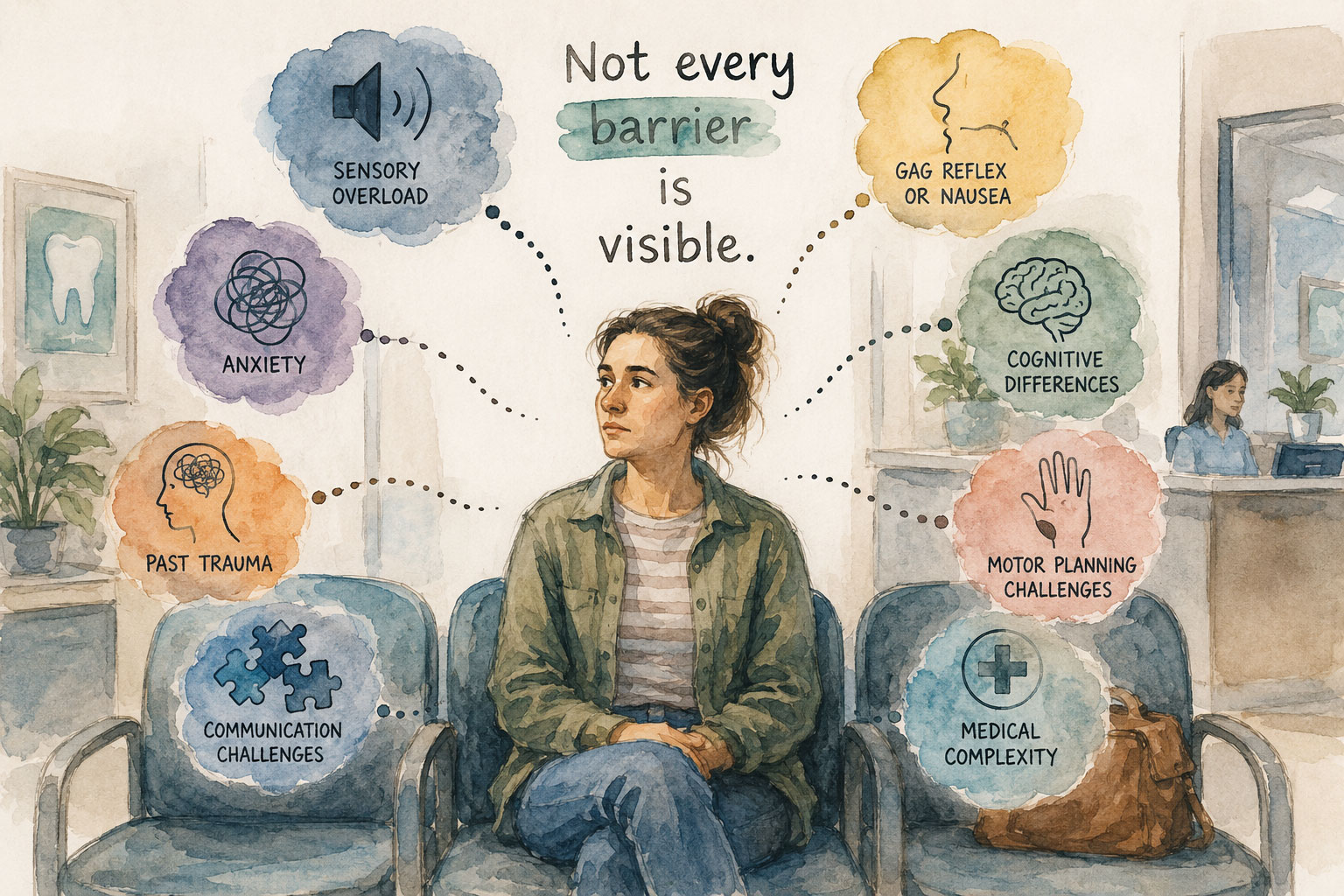
Past negative experiences, sensitivity to sounds or sensations, fear of pain, difficulty sitting still, a strong gag reflex, cognitive or developmental differences, and complex medical conditions can all make traditional dental treatment challenging.
The important thing to know is that dental care does not have to follow a one-size-fits-all approach.
Start by telling the dental team what makes treatment difficult for you. That conversation may lead to simple accommodations such as:
- explaining procedures before beginning
- establishing a signal when you need a break
- reducing sensory stimulation
- bringing a trusted caregiver or companion
- asking whether extra time can be scheduled
- using distraction or relaxation techniques
- discussing whether sedation may be appropriate
For children, including children with special health care needs, the American Academy of Pediatric Dentistry recognizes a broad range of behavior-guidance approaches. Depending on the individual, these can include communication techniques, tell-show-do, distraction, desensitization, sensory-adapted environments, breathing exercises, nitrous oxide, sedation, or general anesthesia. The appropriate approach should be selected for the individual patient rather than applied automatically.5
When Traditional Dental Care Is Difficult
Some patients face barriers that go beyond ordinary nervousness.
A person with severe dental phobia may repeatedly postpone appointments. Someone with autism or another sensory or developmental condition may find the sights, sounds, physical sensations, or unfamiliar environment of a dental office overwhelming. A person with dementia may become confused or distressed by changes in routine. And a homebound patient may be perfectly willing to see a dentist but physically unable to travel to an office.
These situations call for individualized care, not judgment.
At Blende Dental Group, the goal is to remove those barriers by offering special-needs dental care and different ways to receive dental treatment based on a patient’s medical, physical, cognitive, and emotional needs.
For patients with dental anxiety or those who have difficulty tolerating conventional care, BDG offers a range of sedation dentistry options, including nitrous oxide, oral conscious sedation, IV sedation, and general anesthesia. The practice works with patients individually to determine an appropriate approach, and IV sedation and general anesthesia are administered by physician anesthesiologists.
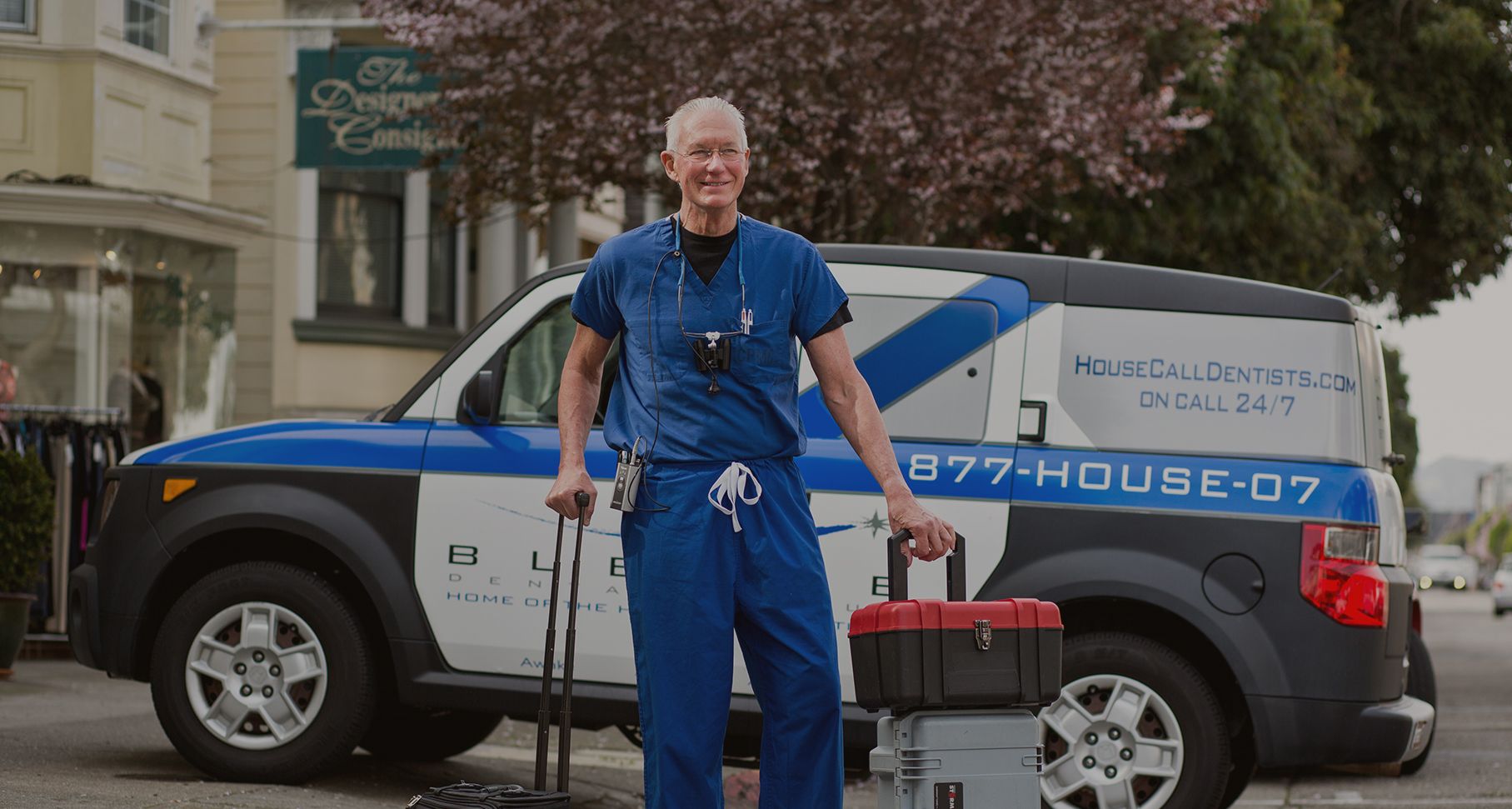
For patients who cannot easily travel, Blende Dental Group’s House Call Dentists can also provide evaluations and certain treatments using portable dental equipment in a patient’s home. When treatment cannot appropriately be completed at home because of the complexity of treatment or safety considerations, care may instead be coordinated in an office or hospital setting.
This approach reflects BDG’s focus on individualized care for patients who face barriers because of phobias, disabilities, cognitive conditions, medical complexity, or mobility limitations.
A Healthy Smile Doesn’t Require a Candy-Free Halloween
Halloween should be fun.
You can enjoy a favorite chocolate bar, share candy with your children, and participate in the traditions you love without assuming that every piece of candy spells disaster for your teeth.
Think timing, moderation, and consistency:
Enjoy sweets at defined times rather than grazing all day. Choose treats that don’t linger on your teeth when you can. Drink water. Brush twice a day with fluoride toothpaste. Clean between your teeth. And keep up with regular dental care.
Most importantly, don’t let fear or difficulty accessing a conventional dental office keep you from seeking help. Whether you need a little extra reassurance, a sedation option, specialized care, or a dentist who can come to you, there may be a comfortable path forward.
This Halloween, save the scares for the costumes, not your dental care. Contact us today to schedule an appointment.
Sources
1 National Institute of Dental and Craniofacial Research (NIDCR). The Tooth Decay Process: How to Reverse It and Avoid a Cavity.
2 American Dental Association, MouthHealthy. Halloween Survival Guide; Dental Emergencies.
3 American Dental Association, MouthHealthy. Water and Dental Health: 4 Reasons Water Is the Best Beverage for Your Teeth.
4 American Dental Association, MouthHealthy. Official ADA Dental Health Recommendations.
5 American Academy of Pediatric Dentistry. Behavior Guidance for the Pediatric Dental Patient.
Related Articles
Blende Dental Group
4964

Blende Dental Group
10298

Blende Dental Group
26692
Blende Dental Group
38716

Blende Dental Group
47178
Blende Dental Group
49279

Blende Dental Group
48547

Blende Dental Group
77324

Blende Dental Group
109161

Blende Dental Group
131349

Blende Dental Group
481342
Blende Dental Group
436245
Blende Dental Group
434305
Blende Dental Group
226774

Blende Dental Group
539952

Blende Dental Group
431063
Blende Dental Group
229206

Blende Dental Group
126724

Blende Dental Group
426395
Blende Dental Group
519714
Blende Dental Group
232901
Blende Dental Group
552528

Blende Dental Group
298270

Blende Dental Group
173362

Blende Dental Group
311283

Blende Dental Group
181005
Blende Dental Group
520418

Blende Dental Group
327813

Blende Dental Group
325638

Blende Dental Group
187393

Blende Dental Group
339064

Blende Dental Group
383697

Blende Dental Group
480572

Blende Dental Group
199491

Blende Dental Group
219493

Blende Dental Group
223648
Blende Dental Group
229749
Blende Dental Group
230948
Blende Dental Group
283125
Blende Dental Group
518606
Blende Dental Group
604360
Blende Dental Group
515732

Blende Dental Group
463697

Blende Dental Group
476244
Blende Dental Group
511367
Blende Dental Group
256857

Blende Dental Group
571924
Blende Dental Group
589837
Blende Dental Group
551836
Blende Dental Group
549969
Blende Dental Group
550514
Blende Dental Group
548029
Blende Dental Group
545440
Blende Dental Group
547068
Blende Dental Group
541717

Blende Dental Group
549019

Blende Dental Group
548071
Blende Dental Group
547767

Blende Dental Group
546925
Blende Dental Group
547313
Blende Dental Group
546282

Blende Dental Group
545424
Blende Dental Group
546063

Blende Dental Group
544653
Blende Dental Group
545473

Blende Dental Group
544208
Blende Dental Group
545844
Blende Dental Group
537870
Blende Dental Group
543769
Blende Dental Group
543015
Blende Dental Group
577397

Blende Dental Group
554485
Blende Dental Group
577250
Blende Dental Group
543230

Blende Dental Group
553578
Blende Dental Group
474790
Blende Dental Group
475355
Blende Dental Group
474519
Blende Dental Group
476924
Blende Dental Group
485417
Let's brighten
that smile
The when and where are up to you.