Dental Emergencies
How Can Families, Group-Home Staff, and Care Teams Work Together to Prevent Dental Emergencies?
 Blende Dental Group
 24588
24588
Key Takeaways
- Routine, preventative dental care can help identify small problems before they become painful or urgent.
- Clear communication between families, group-home staff, and dental providers helps reduce gaps in care.
- Every resident should have an individualized oral-care plan that explains what support they need and what works best for them.
- Group-home staff can play an important role in noticing changes in eating, behavior, sleep, or daily routines that may signal dental discomfort.
- Consistent documentation across staff shifts can help prevent important information from being lost.
- Dental teams should provide clear instructions before and after appointments so caregivers know what to expect and when to follow up.
- A shared system of care is often more reliable than depending on one caregiver or family member to manage everything.
- If a dental emergency arises or you’d like to discuss care needs further, contact Blende Dental Group 24/7 at (415) 563-4261 or (646) 461-1295 for assistance.
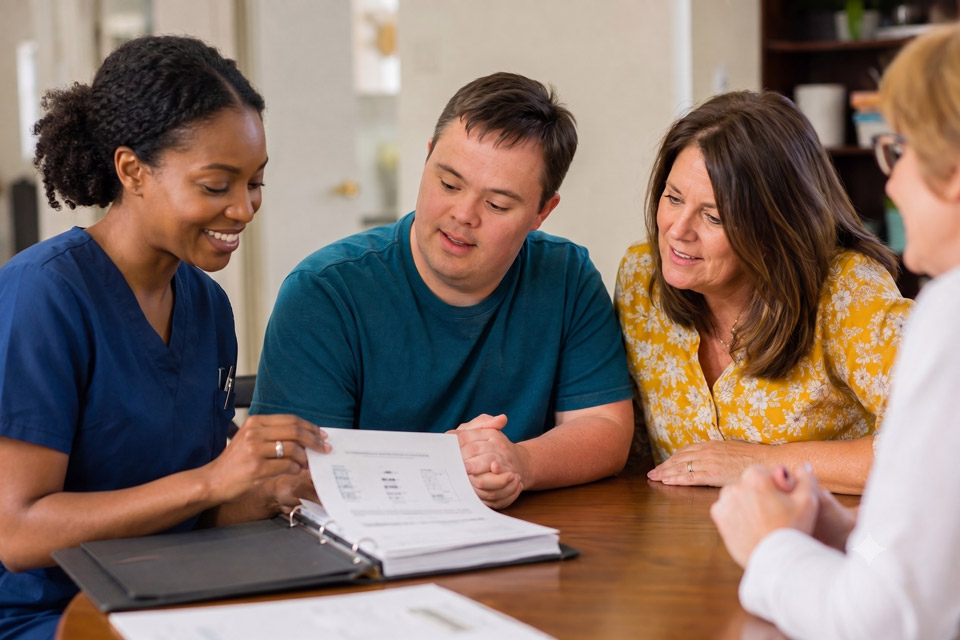
For a person living in a group home, good oral health often depends on more than one caregiver. Family members may know the resident’s history and preferences. Direct-support professionals may assist with daily brushing. Nurses may manage medications and medical information. Administrators may coordinate transportation and appointments. Dental professionals provide examinations, treatment, and guidance.
Each person contributes something important. However, when information is not shared or responsibilities are unclear, small dental concerns can be overlooked until they become painful emergencies.
A consistent, collaborative approach can help families, group-home staff, and care teams identify problems earlier, support daily oral care, and make routine dental visits easier to complete.
Why Do Gaps in Dental Care Develop?
People who live in group homes have a wide range of abilities, medical conditions, communication styles, and support needs. Some residents manage their oral care independently. Others need reminders, adapted equipment, supervision, or hands-on assistance.
Gaps in care can develop when:
- No one is clearly responsible for scheduling routine appointments.
- Oral care is documented inconsistently across shifts.
- Staff members have limited oral-health training.
- A resident cannot easily describe pain or discomfort.
- Transportation or staffing problems lead to canceled appointments.
- Information is lost during staff turnover or a move between residences.
- Families, residential staff, and providers assume someone else is handling follow-up.
- Dental recommendations are too general to apply in the home.
These gaps do not necessarily reflect a lack of concern. They often arise because several people are involved and no shared system connects their work.
How Does Routine Care Help Prevent Dental Emergencies?
Dental emergencies often appear to happen suddenly, but many begin as smaller problems. Tooth decay, gum inflammation, broken restorations, dry mouth, and difficulty maintaining oral hygiene can worsen when they are not recognized or treated.
Daily brushing with fluoride toothpaste, cleaning between the teeth, limiting frequent exposure to added sugar, and attending routine dental visits are central parts of maintaining oral health.1 For residents who cannot brush or floss independently, caregivers may need to provide assistance or help adapt the tools and techniques being used.2
Routine dental appointments also give the dentist an opportunity to:
- Look for early signs of decay, infection, gum disease, or tooth damage
- Review changes in medications and medical conditions
- Evaluate whether current oral-care methods are effective
- Recommend adapted toothbrushes or other helpful products
- Provide caregivers with practical instructions
- Plan treatment before a problem becomes urgent
Preventative care may be especially important for residents who cannot reliably identify, locate, or communicate discomfort. Regular observation by people who know the resident well can help the dental team detect changes that might otherwise go unnoticed.
What Should Families Contribute?
Families often hold valuable information that may not appear in a medical chart. They may understand how the resident expresses discomfort, what has made previous dental visits successful, and which situations are likely to create distress.
Families can support the care partnership by sharing:
- The resident’s dental and medical history
- Previous experiences with dental treatment
- Communication preferences
- Sensory sensitivities
- Signs that may indicate pain, fear, or distress
- Helpful routines, objects, music, or calming strategies
- Previous experiences with sedation or anesthesia
- The names of former dental providers
- Insurance, consent, and guardianship information
This information should be documented in a format that can remain with the resident, rather than depending on one family member or staff member to remember it.
Families can also help establish long-term priorities. These might include preserving the resident’s ability to chew comfortably, supporting independence with brushing, or reducing the likelihood that extensive treatment will be needed later.
What Is the Role of Group-Home Staff?
Group-home staff are often in the best position to observe what happens from day to day. They may notice subtle changes before anyone else does.
Possible signs of an oral-health problem include:
- Eating more slowly or refusing certain foods
- Chewing on only one side
- Touching or rubbing the face
- Drooling more than usual
- Avoiding hot, cold, hard, or crunchy foods
- Changes in sleep
- Persistent bad breath
- Bleeding gums
- Swelling of the face, jaw, or gums
- A broken or visibly damaged tooth
- Increased agitation, withdrawal, or resistance during personal care
A change should not automatically be assumed to be behavioral. Pain, infection, a sharp tooth, or an uncomfortable dental appliance may be contributing.
Staff members should document what they observe, including when the change began, what seems to trigger it, and whether it affects eating, sleeping, speaking, or daily activities. This gives families, nurses, and dental providers more useful information than a general note that the resident has not been acting like themselves.
Why Does an Individual Oral-Care Plan Matter?
Oral care should be included in the resident’s personal care plan. Guidance for residential care settings recommends assessing each resident’s oral-care needs and preferences and documenting the daily support staff should provide.3
An individual oral-care plan can include:
- Whether the resident brushes independently
- What type of prompting or assistance is needed
- The preferred toothbrush and toothpaste
- Sensitivities to flavor, foam, vibration, touch, or water temperature
- The best time and location for brushing
- Positioning or mobility needs
- Denture or appliance-care instructions
- Signs the resident may use to communicate discomfort
- Strategies that make oral care easier
- The resident’s dentist and emergency contact information
- The date of the last dental visit and next recommended appointment
The plan should be specific. “Assist with brushing” can mean different things to different staff members. A more useful instruction might explain that the resident brushes the front teeth independently and needs hands-on assistance with the back teeth.
The resident should be included in developing the plan to the greatest extent possible. Support should preserve privacy, choice, dignity, and independence rather than automatically taking over the task.
How Can Group Homes Maintain Consistency Across Staff Shifts?
A good plan only works when it is followed consistently. Group homes can reduce gaps by incorporating oral care into ordinary shift routines and records.
Helpful practices include:
Assigning an oral-health point person.
This person can track appointments, update care plans, maintain supplies, and communicate with the dental office.
Including oral care in shift documentation.
Staff can record whether care was completed, partially completed, declined, or changed because of pain or another concern.
Providing practical staff training.
Training should cover brushing, flossing, denture care, adapted equipment, and positioning. Caregiver guidance is available for developing an individual oral-hygiene program and assisting people who have difficulty completing daily care independently.4
Keeping instructions accessible.
Important information should be easy for regular, temporary, overnight, and newly hired staff to find.
Reviewing the plan after changes.
The plan may need to be updated after dental treatment, a medication change, a hospitalization, a change in mobility, or a move to a new residence.
What Information Should the Dental Team Receive?
Before an appointment, the dental office should receive enough information to prepare appropriately. The American Dental Association recommends gathering information about the patient’s disability, level of independence, dental and social history, communication ability, transportation needs, and preferred appointment times.5
The group-home team may also need to provide:
- A current medication list
- Allergies and relevant medical conditions
- Recent changes in health or behavior
- The resident’s method of communication
- Mobility and positioning needs
- The name and contact information of the legal decision-maker
- Information about consent
- Previous experiences with dental care
- Sensory or environmental accommodations
- Fasting, medication, or transportation considerations
Whenever possible, the staff member accompanying the resident should understand the reason for the appointment and be familiar with the resident’s needs. Sending someone with little information can make it harder for the dental team to assess symptoms, obtain necessary consent, and create a realistic care plan.
What Should the Dental Team Provide After the Visit?
Communication must continue after the resident leaves the dental office. Group-home staff need clear instructions that they can apply during everyday care.
The dental team should explain:
- What was found during the examination
- What treatment was completed
- Whether additional treatment is needed
- What symptoms are expected after treatment
- Which symptoms require a call to the dentist
- Medication and pain-management instructions
- Temporary food or activity restrictions
- When brushing or denture care should resume
- Any changes needed in the daily oral-care routine
- The recommended date for the next visit
Instructions should be written in plain language. Copies may need to be provided to the residence, family, guardian, nurse, or other authorized decision-maker so that important information does not depend on one person’s memory.
When Does a Dental Problem Require Urgent Attention?
Every group home should have a written dental emergency plan. Staff should know which dentist to call, where emergency information is stored, and who is authorized to make decisions.
A dentist should be contacted promptly for concerns such as severe or persistent tooth pain, a broken tooth, a knocked-out tooth, uncontrolled bleeding, an abscess, or significant swelling.
Emergency medical attention is especially important when swelling in the mouth, face, or neck makes it difficult to breathe, speak, or swallow, or when swelling extends toward the eye.6
Group-home staff should not wait for a resident to describe severe pain before seeking advice. For someone who communicates pain differently, changes in eating, sleeping, behavior, or facial expression may be the first indication that urgent evaluation is needed.
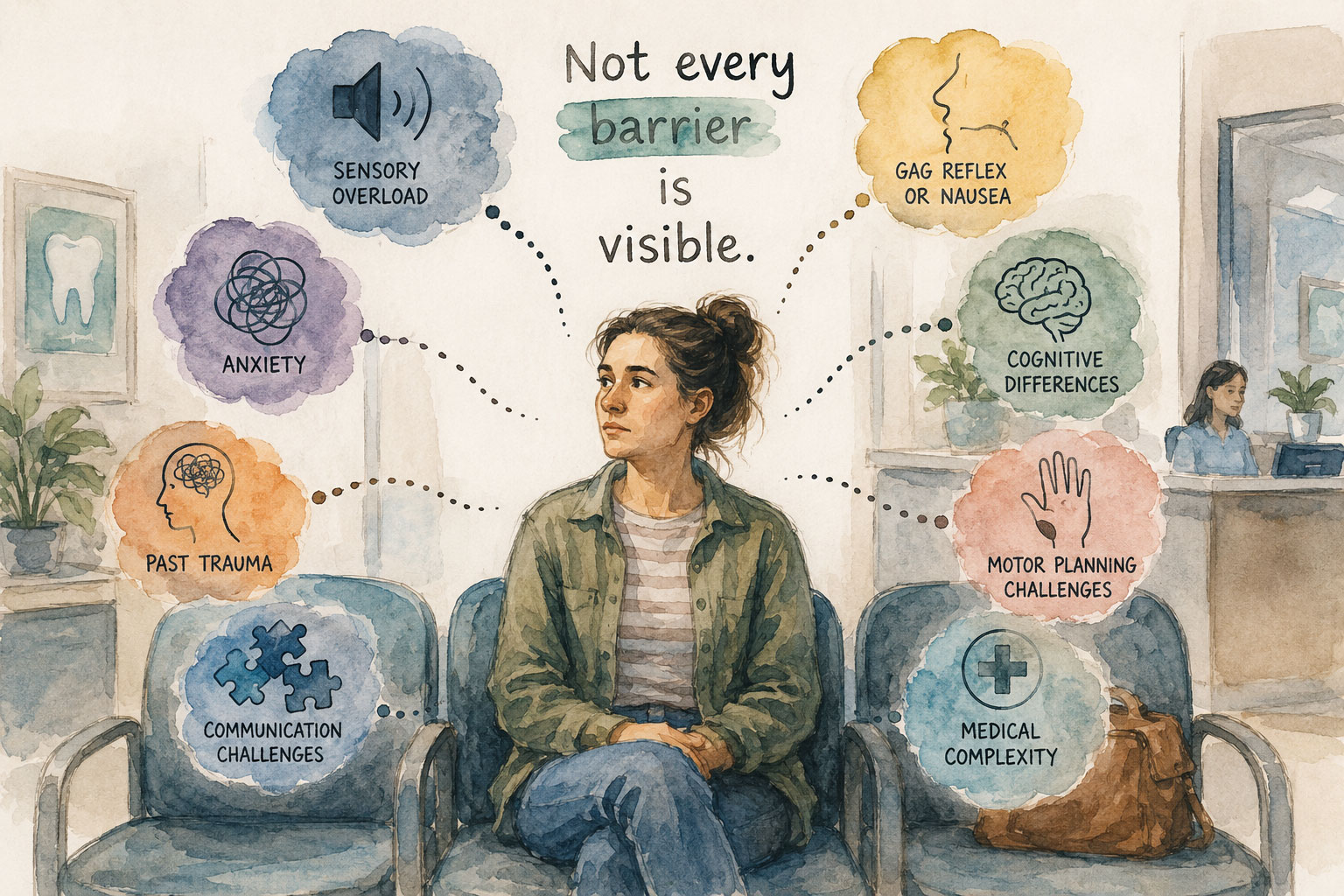
What Happens When Office-Based Care Is Difficult?
Some residents may need additional accommodations to receive dental care safely and comfortably. These might include:
- A quieter appointment time
- Less time in the waiting room
- Gradual familiarization visits
- Modified lighting
- A familiar support person
- Adapted positioning
- Additional appointment time
- Clear, step-by-step communication
For some people, traditional office-based treatment may still not be appropriate. Mobile dental services, sedation, or treatment in a hospital may need to be considered based on the resident’s medical condition, treatment needs, ability to tolerate care, and safety.
The goal is not to force every resident into the same care model. It is to identify an approach that allows necessary treatment to be completed with dignity, comfort, and appropriate clinical support.
A Shared System Is More Reliable Than a Single Caregiver
Preventing dental emergencies in group homes is not the responsibility of one person. It requires a system that continues through staff changes, family transitions, medical appointments, and changes in the resident’s needs.
Families contribute history and personal knowledge. Group-home staff provide daily support and observation. Nurses and medical providers help manage health conditions and medications. Dentists provide clinical care and individualized recommendations. Most importantly, the resident contributes their preferences, experiences, and goals.
When these participants communicate consistently, routine care is less likely to be missed. Changes are more likely to be recognized early, instructions are more likely to be followed, and dental concerns can often be addressed before they become emergencies.
The partnership can begin with a simple question: Does everyone involved know what the resident needs, who is responsible for each step, and what to do when something changes?
Learn more about Blende Dental Group and how we can help or call our 24/7 emergency line at (415) 563-4261 or (646) 461-1295.
Footnotes and Sources
1 Centers for Disease Control and Prevention. “Oral Health Tips for Adults.” Recommendations include brushing twice daily with fluoride toothpaste, cleaning between the teeth, reducing added sugar, and receiving regular dental care.
2 National Institute of Dental and Craniofacial Research. “Developmental Disabilities and Oral Health.” Includes guidance for caregivers on assisted brushing, adapted toothbrushes, flossing aids, and professional dental care.
3 UK Office for Health Improvement and Disparities. “Chapter 8: Oral Hygiene.” Summarizes guidance on assessing residents’ oral-health needs and documenting daily support in personal care plans.
4 Special Olympics Special Smiles. “A Caregiver’s Guide to Good Oral Health for Persons With Special Needs.” Provides practical instructions for brushing, flossing, adapted equipment, positioning, and personal oral-hygiene programs.
5 American Dental Association. “Considerations for Patients With Special Needs.” Addresses patient assessment, communication, independence, transportation, appointment planning, caregiver involvement, and accommodations.
6 National Health Service. “Dental Abscess.” Identifies difficulty breathing, speaking, or swallowing and swelling near the eye as reasons to seek emergency medical care.
Related Articles
Blende Dental Group
2684
Blende Dental Group
36510

Blende Dental Group
45132

Blende Dental Group
47220

Blende Dental Group
75065

Blende Dental Group
106897

Blende Dental Group
128877

Blende Dental Group
97608

Blende Dental Group
171053

Blende Dental Group
178770

Blende Dental Group
106819

Blende Dental Group
185157

Blende Dental Group
197449

Blende Dental Group
217446
Blende Dental Group
228895

Blende Dental Group
567933
Blende Dental Group
585848
Blende Dental Group
573579

Blende Dental Group
573412
Blende Dental Group
471630
Blende Dental Group
472189
Blende Dental Group
471359
Blende Dental Group
473731
Blende Dental Group
482165
Let's brighten
that smile
The when and where are up to you.