
Special Needs
Dental Warning Signs in Nonverbal Patients
 Blende Dental Group
 51330
51330

When a patient cannot clearly say, “My tooth hurts,” dental problems can be easy to miss. This is especially true for patients who are nonverbal, nonspeaking, minimally speaking, living with dementia, or unable to reliably describe pain.
In these cases, caregivers often notice changes before they see an obvious dental problem. A loved one may refuse food, pull at their mouth, resist brushing, drool more than usual, develop persistent bad breath, or seem unusually agitated during meals. These behaviors may not seem “dental” at first, but they can be important warning signs.
For nonverbal patients, the mouth often tells the story through behavior.
Why Dental Pain Looks Different in Nonverbal Patients
Many dental conditions cause pain, pressure, sensitivity, or discomfort. But patients who cannot explain what they feel may communicate distress through changes in eating, facial expression, sleep, mood, cooperation, or tolerance for daily care.
This is especially important for patients with developmental disabilities. The National Institute of Dental and Craniofacial Research notes that developmental disabilities such as autism, cerebral palsy, Down syndrome, and others can create challenges with daily self-care, including oral health. These patients may need extra support with brushing, flossing, dental visits, and maintaining oral hygiene.¹
A person with dementia may also have increasing difficulty with dental care as the disease progresses. The Alzheimer’s Association recommends watching for signs of mouth pain during meals, such as refusing to eat, wincing, frowning, or showing discomfort.²
Instead of saying “my tooth hurts,” a nonverbal patient may:
- Refuse meals or favorite foods
- Chew on only one side
- Push food out of the mouth
- Pull at the cheek, jaw, lips, or mouth
- Resist toothbrushing or denture care
- Grind or clench more than usual
- Drool, gag, or hold the mouth open
- Become irritable, withdrawn, restless, or combative
- Show increased self-injurious behavior or new mouth-related behaviors
- Develop bad breath or a bad taste that does not improve with cleaning
These signs do not always mean there is a dental emergency. But they do mean the mouth should be checked.
Sensory Sensitivities and Dental Warning Signs
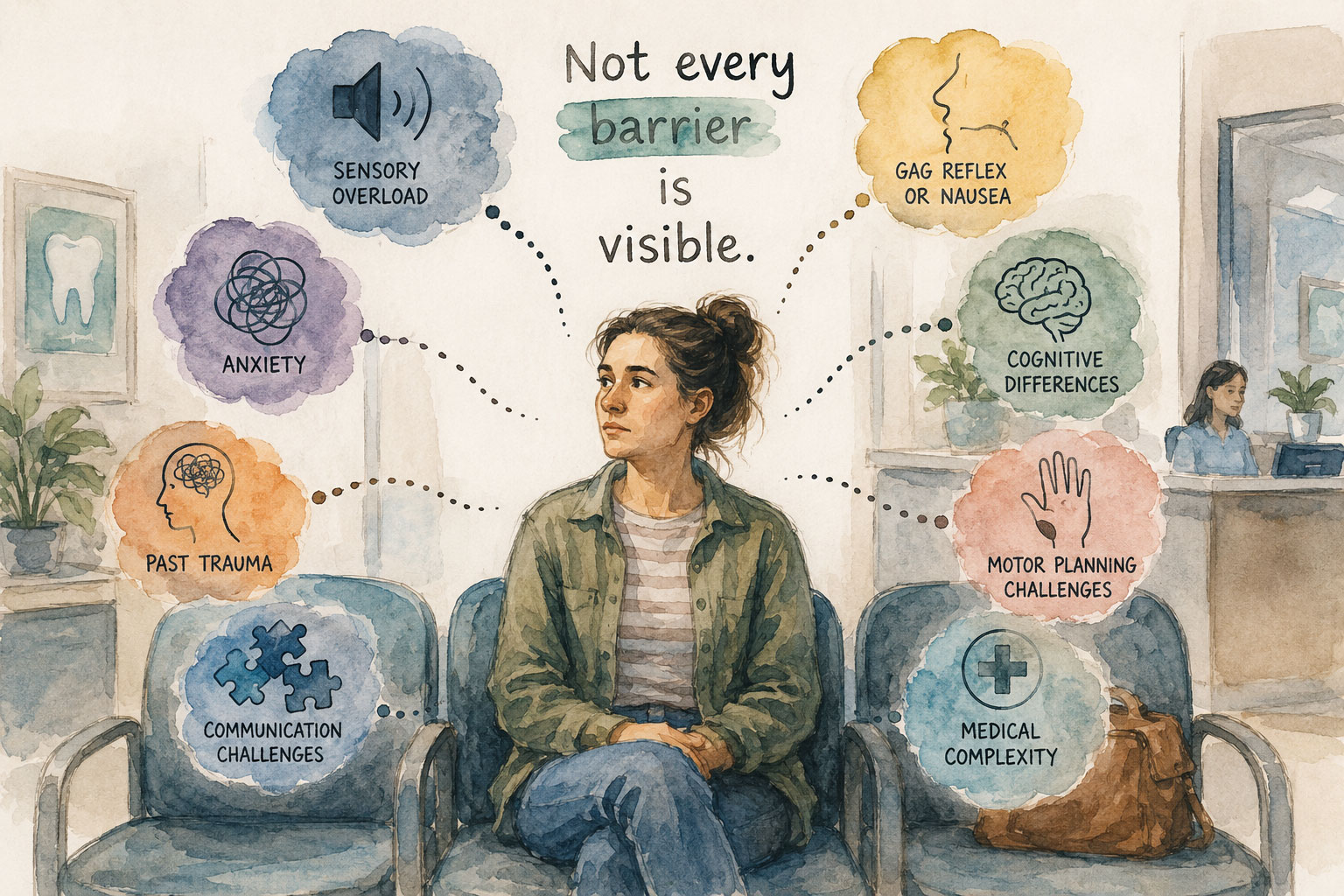
For patients with sensory sensitivities, dental discomfort may be harder to recognize because behavior changes can be mistaken for sensory overload, anxiety, routine disruption, or “behavioral” resistance. In some cases, however, the behavior is the message.
A patient may suddenly refuse toothbrushing because the gums are inflamed. They may avoid crunchy foods because a tooth hurts. They may hit the jaw, press on the cheek, chew on clothing, or put fingers in the mouth because they are trying to respond to pain or pressure.
Autism Speaks notes that dental care can be challenging for autistic children and families, and that preparation, visual supports, and practice with dental tools may help make oral care and dental visits more comfortable.⁵
Caregivers should pay close attention to changes from the patient’s usual baseline, including:
- New refusal of toothbrushing or flossing
- Stronger resistance to oral care than usual
- New food selectivity or refusal of previously accepted foods
- Increased chewing on objects, clothing, or fingers
- More frequent hands in the mouth
- New sleep disruption
- Increased irritability, aggression, withdrawal, or self-injury
- Avoidance of hot, cold, sweet, crunchy, or chewy foods
- Increased gagging, drooling, grinding, or jaw clenching
A familiar, predictable, and sensory-aware approach can make dental care easier. Caregivers may want to share the patient’s communication style, sensory preferences, triggers, routines, and calming strategies with the dental team before the visit.
Bad Breath That Does Not Go Away
Occasional bad breath can happen to anyone. But persistent bad breath, especially when it is new or worsening, may point to an oral health issue such as plaque buildup, gum disease, dry mouth, or infection.
The American Dental Association’s MouthHealthy resource notes that bad breath may be caused by several factors, including poor oral hygiene, gum disease, dry mouth, certain foods, and medical conditions.³
In nonverbal patients, bad breath may be one of the first noticeable changes. Caregivers should pay attention if breath odor is paired with:
- Bleeding gums
- Swollen or red gums
- Loose teeth
- Food packing around teeth
- Visible cavities or broken teeth
- A bad taste
- Drainage or pus
- Facial swelling
- Fever or general illness
If bad breath appears suddenly or does not improve with routine cleaning, it is worth scheduling a dental evaluation. If it occurs with swelling, fever, trouble swallowing, trouble breathing, or signs of spreading infection, the patient needs urgent medical or dental attention.
Refusing Food or Changes During Meals
Food refusal is one of the most important dental warning signs in patients who cannot describe pain. A patient may stop eating because chewing hurts. They may avoid hot, cold, crunchy, acidic, or sweet foods because of tooth sensitivity. They may also struggle with loose dentures, broken teeth, ulcers, gum inflammation, jaw pain, or oral dryness.
The Alzheimer’s Association specifically advises caregivers to watch for signs of mouth pain during meals, including refusal to eat or visible discomfort.²
Meal-related warning signs include:
- Suddenly eating less
- Taking much longer to finish meals
- Pocketing food in the cheeks
- Spitting food out
- Refusing dentures
- Avoiding hard or chewy foods
- Grimacing while chewing
- Holding the face or jaw
- Weight loss or dehydration
These changes are sometimes mistaken for picky eating, dementia progression, sensory aversion, behavioral resistance, or appetite loss. While those may be factors, dental pain should always be considered.
Pulling at the Mouth, Face, or Jaw
Pulling at the mouth can be a pain signal. A patient may rub the jaw, tug on the cheek, hold the chin, touch the lips repeatedly, or try to place fingers inside the mouth.
Possible dental causes include:
- Toothache
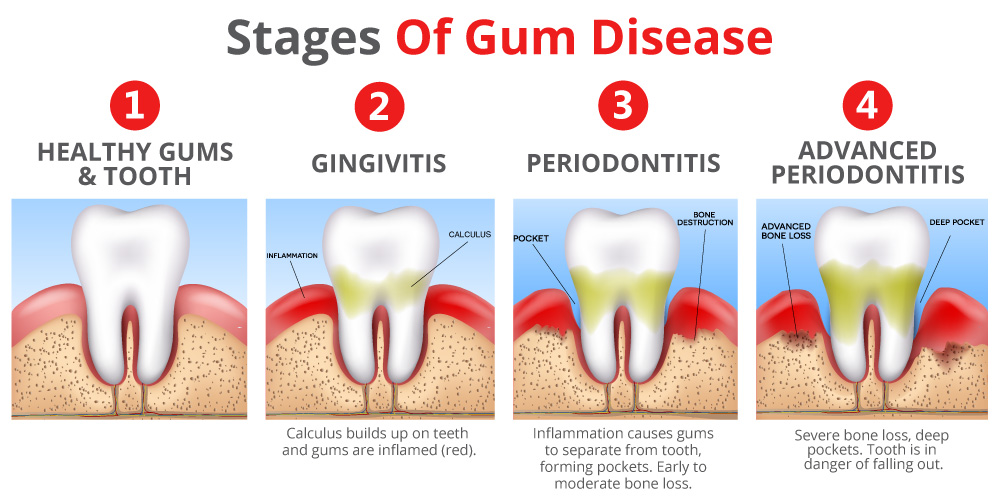
- Gum irritation or infection
- Broken tooth
- Loose tooth
- Oral sore or ulcer
- Ill-fitting denture
- Food or debris trapped around a tooth
- Jaw soreness from clenching or grinding
- Dry mouth or burning mouth discomfort
For some patients, the behavior may look like agitation, sensory seeking, or self-stimulation. The key is to look for patterns. Does it happen during meals? During brushing? At night? After drinking something cold? When dentures are placed? Those patterns can help a dentist or caregiver understand what may be causing discomfort.
Dry Mouth Can Make Problems Worse
Dry mouth is common in older adults and medically complex patients, often because of medications, dehydration, or medical conditions. The National Institute of Dental and Craniofacial Research explains that dry mouth can make it harder to chew, swallow, taste, and speak, and it can increase the risk of tooth decay and oral infections.⁴
For nonverbal patients, dry mouth may show up as:
- Sticky lips or thick saliva
- Increased thirst
- Trouble chewing or swallowing
- Bad breath
- Cracked lips
- More cavities
- Denture discomfort
- Mouth sores
Because many patients with complex medical needs take multiple medications, caregivers should tell the dentist about all prescriptions, over-the-counter medications, supplements, and recent health changes.
When to Call a Dentist
Caregivers should contact a dentist when they notice a new or persistent change in eating, oral hygiene tolerance, breath, swelling, bleeding, or mouth-related behavior.
Call promptly if the patient has:
- Persistent bad breath or bad taste
- Refusal to eat or drink
- Swelling of the gums, face, or jaw
- Bleeding gums
- A broken, loose, or darkened tooth
- A visible sore, bump, or pus near the gums
- Signs of pain while chewing
- New resistance to brushing or denture care
- Sudden agitation that seems worse during meals or mouth care
- New or worsening self-injurious behavior involving the mouth, face, or jaw
Seek urgent care if there is facial swelling, fever, trouble swallowing, trouble breathing, or signs that an infection may be spreading.
What Caregivers Can Check at Home
A quick visual check can help identify whether dental care is needed. Use good lighting and avoid forcing the mouth open if the patient is distressed.
Look for:
- Swollen, red, or bleeding gums
- Broken teeth or sharp edges
- Brown, black, or white spots on teeth
- Food trapped near the gumline
- Loose crowns, bridges, or dentures
- Sores on the tongue, cheeks, lips, or palate
- White patches or signs of irritation
- Drooling or thick saliva
- A one-sided chewing pattern
Do not try to diagnose the problem at home. The goal is to notice changes early and share clear observations with the dental team.
Why Specialized Dental Care May Be Needed
Nonverbal patients may need more than a standard office appointment. Some patients cannot safely travel to a dental office. Others become overwhelmed in unfamiliar environments. Some need a slower introduction to care, caregiver involvement, sensory accommodations, sedation, hospital dentistry, or a coordinated medical-dental approach because of complex health needs.
This can include patients with dementia, autism, physical disabilities, developmental disabilities, severe anxiety, medical complexity, mobility limitations, or behavioral challenges that make traditional dental care difficult.
The NIDCR notes that people with developmental disabilities may need extra help to achieve and maintain good oral health, and that behavior, mobility, neuromuscular issues, drooling, gagging, swallowing problems, and uncontrolled movements can complicate oral care.¹
Preparation can be especially helpful. Caregivers may ask the dental team about visual supports, pre-visit tours, shorter appointments, sensory accommodations, extra time, familiar comfort items, or a gradual approach to care.⁵
How Caregivers Can Prepare for the Dental Visit
Before contacting the dentist, write down:
- When the behavior started
- What makes it better or worse
- Whether it happens during meals, brushing, or denture use
- Any recent falls, injuries, illnesses, or medication changes
- Whether the patient has fever, swelling, or drainage
- What foods the patient now refuses
- Whether chewing has changed
- Whether the patient can tolerate toothbrushing
- Any photos of swelling, broken teeth, or mouth sores
- Known sensory triggers, calming strategies, communication preferences, and helpful routines
This information helps the dental team determine whether the patient needs an office visit, a modified appointment, imaging, palliative care, a sedation consultation, or urgent treatment.
The Bottom Line
For nonverbal patients, dental pain may not look like dental pain. It may look like refusing food, pulling at the mouth, resisting brushing, sleeping poorly, acting agitated, becoming more sensory-sensitive, or developing persistent bad breath.
Caregivers know their loved ones best. When behavior changes suddenly or oral warning signs appear, it is worth asking: “Could this be coming from the mouth?”
Early dental evaluation can help relieve pain, treat infection, improve eating, and protect overall health — especially for patients who cannot speak up for themselves.
Contact Blende Dental Group to speak with our team and learn more.
Footnotes
- National Institute of Dental and Craniofacial Research. “Developmental Disabilities and Oral Health.”
https://www.nidcr.nih.gov/health-info/developmental-disabilities - Alzheimer’s Association. “Dental Care.”
https://www.alz.org/help-support/caregiving/daily-care/dental-care - American Dental Association / MouthHealthy. “Bad Breath.”
https://www.mouthhealthy.org/all-topics-a-z/bad-breath - National Institute of Dental and Craniofacial Research. “Dry Mouth.”
https://www.nidcr.nih.gov/health-info/dry-mouth - Autism Speaks. “Dental Tool Kit.”
https://www.autismspeaks.org/tool-kit/autism-dental-care
Related Articles

Blende Dental Group
5389

Blende Dental Group
7342

Blende Dental Group
28835
Blende Dental Group
40984

Blende Dental Group
49228

Blende Dental Group
79684

Blende Dental Group
111536

Blende Dental Group
134002

Blende Dental Group
175788

Blende Dental Group
183348

Blende Dental Group
189728

Blende Dental Group
201533

Blende Dental Group
221541
Blende Dental Group
233000

Blende Dental Group
576932

Blende Dental Group
594938
Blende Dental Group
582272

Blende Dental Group
582136

Blende Dental Group
478723
Blende Dental Group
479287

Blende Dental Group
478444
Blende Dental Group
480897

Blende Dental Group
489503
Let's brighten
that smile
The when and where are up to you.