
Blog
Dental solutions tailored to your lifestyle and schedule

Who Signs the Consent Form? Guardianship, Supported Decision-Making, and Dental Treatment
Key Takeaways The person who accompanies a patient to a dental appointment is not necessarily the person who has legal authority to consent to treatment. Guardians, healthcare agents, or others with appropriate legal authority may make healthcare decisions in certain...

How Can Families, Group-Home Staff, and Care Teams Work Together to Prevent Dental Emergencies?
Key Takeaways Routine, preventative dental care can help identify small problems before they become painful or urgent. Clear communication between families, group-home staff, and dental providers helps reduce gaps in care. Every resident should have an individualized...
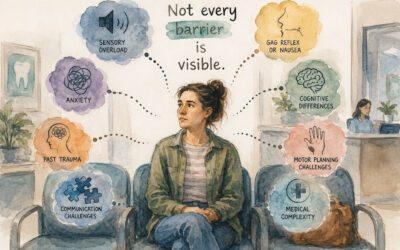
Not Every Barrier to Dental Care Is Visible
Some disabilities are easy for others to recognize. A wheelchair, a walker, a visible medical device, or a caregiver at someone’s side can signal that a person may need extra support. But many barriers to dental care are not visible. A patient may walk into a dental...

Casey Nez’s Experience: A Patient Story About Dignity and Access
When Diane “Casey” Nez sent a letter to Dr. David Blende after her recent visit, she was simply putting into words what she had experienced as his patient. “It is always a pleasure to see you. You are such a good and kind man that I never worry when I have a toothache...

Dental Warning Signs in Nonverbal Patients
When a patient cannot clearly say, “My tooth hurts,” dental problems can be easy to miss. This is especially true for patients who are nonverbal, nonspeaking, minimally speaking, living with dementia, or unable to reliably describe pain. In these cases, caregivers...

The Loneliness Epidemic: You Are Not Alone
There is a growing conversation happening across healthcare about the loneliness epidemic. It is often discussed in terms of emotional well-being. But loneliness also affects something just as important. It influences how people care for themselves, how they access...